
Who was Erwin Rommel?
Erwin Rommel (15 November 1891 – 14 October 1944) was a German field marshal who gained international fame during the Second World War as commander of the Afrika Korps and German forces in North Africa. Nicknamed the "Desert Fox", Rommel became known for his bold tactics, leadership and ability to conduct mobile warfare under difficult conditions. Widely respected by both allies and enemies, he remains one of the most famous military commanders of the twentieth century. Following the failed assassination attempt against Adolf Hitler on 20 July 1944, Rommel was implicated in the plot and was forced to commit suicide on 14 October 1944.
Quick Facts
Full name: Johannes Erwin Eugen Rommel
Born: 15 November 1891, Heidenheim an der Brenz, German Empire
Died: 14 October 1944, Herrlingen, Germany
Age at death: 52
Rank: Generalfeldmarschall (Field Marshal)
Organization: German Army (Heer)
Known for: Commanding German and Italian forces in North Africa during the Second World War
Nickname: The Desert Fox (Wüstenfuchs)
Historical significance: One of Germany's most respected military commanders, renowned for his leadership in North Africa and later implicated in the aftermath of the 20 July Plot against Adolf Hitler
Early Life
Johannes Erwin Eugen Rommel was born in Heidenheim an der Brenz, in the Kingdom of Württemberg, then part of the German Empire. He was the son of Erwin Rommel Sr., a schoolteacher, and Helene von Luz. Unlike many senior German officers of his generation, Rommel did not come from an old Prussian military aristocracy.
As a boy, Rommel was intelligent, technically minded and energetic. He showed an early interest in engineering and machinery, and at one point considered a technical career. However, his father encouraged him toward the military, and in 1910 Rommel joined the army as an officer cadet. This decision began one of the most remarkable military careers of the twentieth century. From a young officer in Imperial Germany, Rommel would rise through the ranks to become one of the most famous field marshals of the Second World War.
Early Military Career
Rommel entered the 124th Württemberg Infantry Regiment and was commissioned as a lieutenant in 1912. He quickly developed a reputation for discipline, courage and energy. He was not a desk officer. Rommel believed in movement, initiative and leading from the front. His early training took place in the final years before the First World War, when European armies still believed deeply in infantry, discipline and offensive spirit. These ideas shaped him, but the coming war would transform them through experience.
Rommel's first great test came in 1914, when the First World War began.
First World War
During the First World War, Rommel served on several fronts, including the Western Front, Romania and the Italian Front. He quickly proved himself to be an aggressive and resourceful junior officer. Rommel preferred surprise, speed and bold action. He often led small groups of soldiers in difficult terrain and used movement to outflank enemy positions. These experiences shaped the tactical ideas that later made him famous.
He was wounded more than once and received several decorations for bravery. His wartime service gave him direct experience of modern combat and built his reputation as a courageous front-line leader.
The Italian Front and Caporetto
Rommel's most famous First World War achievements came on the Italian Front. During the Battle of Caporetto in 1917, he led mountain troops with remarkable skill. Using surprise, speed and infiltration tactics, Rommel and his men captured large numbers of enemy soldiers and important positions. His actions during the campaign became legendary within the German Army.
For his achievements, Rommel was awarded the Pour le Mérite, Imperial Germany's highest award for military merit. This decoration, often called the Blue Max, marked him as one of the outstanding young officers of the war.
Infantry Attacks
After the First World War, Rommel remained in the reduced German army, the Reichswehr. During the interwar years, he served as an officer, instructor and trainer. He studied his wartime experiences carefully and developed ideas about small-unit leadership, initiative and offensive action. In 1937, Rommel published Infantry Attacks, a book based on his experiences during the First World War. The book emphasized speed, surprise, aggressive leadership and tactical flexibility.
Infantry Attacks became an important military text and helped strengthen Rommel's reputation as a gifted tactical thinker. It also attracted attention from senior figures in the growing Nazi state.
Between the Wars
During the interwar period, Rommel served in the Reichswehr and later in the Wehrmacht. Germany had been restricted by the Treaty of Versailles after 1919, but under Adolf Hitler the German military expanded rapidly. Rommel was not originally a tank officer. His background was infantry and mountain warfare. However, his belief in speed, surprise and direct leadership made him well suited to the mobile warfare that Germany developed in the 1930s.
Rommel also became involved with Hitler's military entourage. His career benefited from the attention and favor he received during this period.
Relationship with Adolf Hitler
Rommel's relationship with Adolf Hitler was one of the most important and complicated elements of his career. In the late 1930s and early years of the war, Rommel admired Hitler and benefited from his personal support. Hitler liked commanders who appeared energetic, loyal and successful. Rommel's dramatic style, personal courage and battlefield victories made him a useful figure for Nazi propaganda.
Over time, however, Rommel became increasingly disillusioned, especially as the military situation deteriorated and Hitler refused to accept strategic reality. The exact depth of Rommel's political beliefs, his knowledge of Nazi crimes and his level of opposition to Hitler remain debated by historians.
The Invasion of France
In 1940, Rommel was given command of the 7th Panzer Division during the German invasion of France and the Low Countries. This was a major opportunity. Although he had not spent his career in armored warfare, he quickly adapted to the demands of fast-moving mechanized operations. The German campaign in the west began on 10 May 1940. German armored forces broke through Allied defenses and advanced with extraordinary speed. Rommel's division became famous for its rapid movements, bold attacks and ability to appear where the enemy did not expect it.
The 7th Panzer Division moved so quickly that it became known as the "Ghost Division", because even German high command sometimes had difficulty knowing exactly where it was.
The Ghost Division
Rommel's command of the 7th Panzer Division made him one of the most visible German commanders of the 1940 campaign. He often led from near the front, pushing his units forward and exploiting confusion among Allied forces. The speed of the Ghost Division created panic and disorder behind enemy lines. Rommel believed in keeping the enemy off balance and preventing them from forming a coherent defense.
The campaign ended with the defeat of France and the evacuation of British forces from Dunkirk. Rommel's reputation grew enormously. He had shown that he could command armored formations with daring and effectiveness.
Arrival in North Africa
In 1941, Rommel was sent to North Africa to command German forces sent to support Italy. These forces became known as the Deutsches Afrikakorps, or Afrika Korps. The Italian Army had suffered serious setbacks against British Commonwealth forces in Libya. Rommel's task was initially defensive, but he quickly went on the offensive. His aggressive actions surprised both the British and his own superiors.
North Africa became the theater where Rommel would gain his most famous nickname: "The Desert Fox".
The Desert Fox
Rommel's campaigns in North Africa made him internationally famous. He conducted rapid movements across the desert, attacked unexpectedly and repeatedly forced British commanders to react to his initiatives. The desert war was a campaign of movement, logistics, supply lines and deception. Rommel excelled at bold tactical action, but his forces were often limited by fuel shortages, long supply routes and the weakness of Axis logistics across the Mediterranean.
His British opponents admired his skill, and his reputation for conducting a more chivalrous form of warfare contributed to the idea of a "war without hate" in North Africa. That phrase became closely associated with the desert campaign, even though modern historians have treated the idea with more caution.
Tobruk and Gazala
One of Rommel's greatest victories came in 1942 during the fighting around Gazala and Tobruk. After a series of maneuvers and battles, Axis forces captured Tobruk in June 1942. The fall of Tobruk was a major shock to the British and a major propaganda victory for Germany. It led to Rommel's promotion to Generalfeldmarschall, or field marshal. He was one of the youngest officers to hold that rank in the German Army.
The victory at Tobruk represented the high point of Rommel's North African career. Yet it also pushed his forces farther into a logistical crisis. The deeper he advanced, the harder it became to supply his army.
El Alamein
Rommel's advance was eventually stopped in Egypt near El Alamein. The position was strategically important because it blocked the route toward Alexandria, the Suez Canal and the Middle East. The First Battle of El Alamein in July 1942 halted the Axis advance. Later, in October and November 1942, the Second Battle of El Alamein was fought against British forces commanded by General Bernard Montgomery.
Montgomery's victory at El Alamein marked a decisive turning point in the North African campaign. Rommel's army was forced into retreat, and the Axis position in North Africa began to collapse.
Retreat from North Africa
After El Alamein, Rommel conducted a long retreat across Libya and into Tunisia. At the same time, Allied forces landed in North Africa during Operation Torch in November 1942, threatening Axis forces from the west. Rommel faced impossible strategic conditions. His forces were outnumbered, undersupplied and caught between advancing Allied armies. He repeatedly urged withdrawal, but Hitler often demanded that positions be held regardless of military reality.
Rommel eventually left North Africa before the final surrender of Axis forces in Tunisia in May 1943. His reputation survived the defeat, but the campaign showed the limits of tactical brilliance when strategy and logistics were failing.
Italy and Western Europe
After North Africa, Rommel held various commands in Europe. He was involved in the defense of Italy and later became one of the commanders responsible for preparing Western Europe against an expected Allied invasion. In late 1943 and early 1944, Rommel was assigned to inspect and strengthen the Atlantic Wall, the German defensive system along the coast of Western Europe.
Rommel understood that Allied air superiority would make it extremely difficult to move German reserves after an invasion began. He argued that the Allies had to be defeated on or near the beaches.
Rommel and Rundstedt
In preparing for the Allied invasion, Rommel disagreed with Field Marshal Gerd von Rundstedt and other senior commanders over strategy. Rundstedt and others preferred keeping armored reserves farther inland, where they could be used for a major counterattack. Rommel believed that Allied air power would prevent such reserves from moving effectively once the invasion began. He wanted panzer divisions positioned closer to the coast so they could strike quickly against the landing forces.
The disagreement was never fully resolved. German defenses in Normandy suffered from divided authority, Hitler's control over reserves and strategic uncertainty.
D-Day and Normandy
On 6 June 1944, the Allies launched Operation Overlord, the invasion of Normandy. Rommel was not at the front when the landings began. He had returned to Germany for his wife's birthday and to meet Hitler. When the invasion began, German command reacted slowly and uncertainly. Hitler's control over armored reserves delayed German counterattacks. Allied air superiority made movement extremely dangerous during daylight.
Rommel quickly understood the seriousness of the situation. He believed that if the Allies established a firm beachhead, Germany would struggle to drive them back into the sea. His warnings proved accurate.
The Normandy Campaign
During the Normandy campaign, Rommel commanded Army Group B. German forces fought stubbornly against British, Canadian and American troops, but the Allies continued to build up men and supplies. Rommel repeatedly warned Hitler that the situation was deteriorating. He believed Germany needed a political solution because the military situation in the west was becoming hopeless.
These views placed him in a dangerous position. Hitler expected loyalty and obedience, not strategic pessimism. Rommel's growing realism brought him closer to those officers who believed Germany had to end the war.
The Air Attack of 17 July 1944
On 17 July 1944, Rommel was traveling by staff car in Normandy when it was attacked by Allied aircraft near the road between Vimoutiers and Livarot. His car was forced off the road, and Rommel suffered severe head injuries. The attack removed him from active command at a critical moment in the Normandy campaign. He was taken for medical treatment and began a slow recovery.
The injuries also meant that Rommel was not directly involved in the events of 20 July 1944, when German officers attempted to assassinate Hitler.
The 20 July Plot
On 20 July 1944, Claus von Stauffenberg and other conspirators attempted to kill Adolf Hitler at the Wolf's Lair headquarters in East Prussia. The attempt failed, and Hitler survived. Rommel's exact connection to the conspiracy remains debated. He was in contact with some opponents of Hitler and appears to have believed that Hitler should be removed from power or forced to negotiate. However, many historians believe that Rommel did not support assassination and preferred arrest or political removal.
After the plot failed, Hitler ordered a ruthless investigation. Many conspirators were arrested, tortured and executed. Rommel's name emerged during the investigation, placing him in mortal danger.
Forced Suicide
Because Rommel was a national hero, Hitler did not want a public trial that might damage morale. Instead, on 14 October 1944, two generals, Wilhelm Burgdorf and Ernst Maisel, came to Rommel's home in Herrlingen. Rommel was given a terrible choice. He could face a public trial for treason, which would likely lead to execution and possible reprisals against his family, or he could take poison. If he chose suicide, his family would be protected and his public reputation would remain intact.
Rommel chose to protect his family. Wearing his Afrika Korps jacket and carrying his field marshal's baton, he left the house and entered the car. Shortly afterward, he took a cyanide capsule and died.
The Official Lie
The German public was told that Erwin Rommel had died from complications related to the injuries he suffered in the air attack in Normandy. This was false. Hitler ordered a state funeral for Rommel and presented him as a fallen hero of the Reich. Field Marshal Gerd von Rundstedt represented Hitler at the funeral, apparently unaware of the full truth behind Rommel's death. The official story concealed the fact that Rommel had been forced to commit suicide by the regime he had served.
Personal Life
Rommel married Lucie Maria Mollin in 1916. Their son, Manfred Rommel, was born in 1928. Manfred later became a respected post-war German politician and mayor of Stuttgart. Rommel was devoted to his family and wrote many letters to Lucie during his military campaigns. These letters reveal a more private side of a man often remembered only as a battlefield commander.
His final decision on 14 October 1944 was strongly shaped by concern for Lucie and Manfred. By accepting forced suicide, he believed he could spare them persecution by the Nazi regime.
The Rommel Myth
After the war, Rommel became the center of what historians often call the Rommel Myth. He was portrayed as a brilliant, chivalrous and largely apolitical commander who fought a clean war and became a victim of Hitler. This image was useful in the post-war years, especially during the rearmament of West Germany and the integration of former German officers into the Western alliance. Former subordinates such as Hans Speidel played roles in rebuilding the post-war German military and joining NATO. Modern historians have treated the Rommel Myth more critically. They acknowledge his military skill and his complicated break with Hitler, but they also examine his service to Nazi Germany, his use in propaganda and the limits of the claim that he was purely apolitical.
Legacy
The legacy of Erwin Rommel remains complex. He was one of the most talented and famous German commanders of the Second World War. His campaigns in France and North Africa showed boldness, tactical imagination and personal courage. At the same time, he served the armed forces of Nazi Germany and benefited from Hitler's support. His later association with opposition circles and his forced suicide made him appear to many as both a German military hero and a victim of the regime.
Rommel's name remains closely associated with the Afrika Korps, the desert war, El Alamein, the defense of Normandy and the tragic aftermath of the 20 July Plot. Today, Erwin Rommel is remembered as "The Desert Fox", a commander admired for tactical brilliance but surrounded by historical debate.
His life and death reflect both the military drama and the moral complexity of Germany's war.
Awards and Decorations
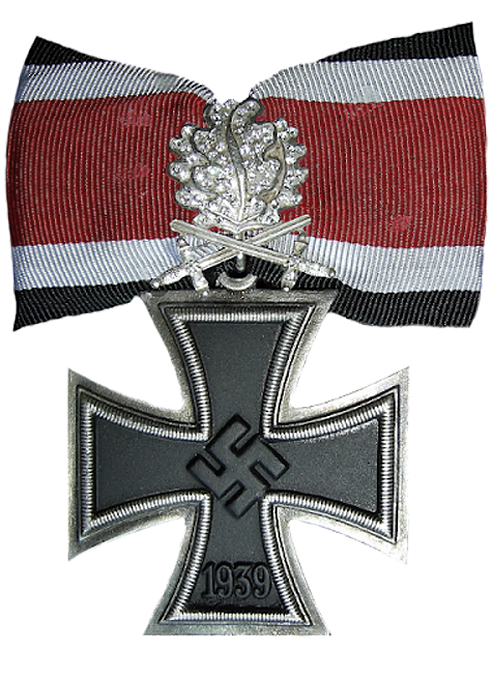
Field Marshal Erwin Rommel was one of the most highly decorated German officers of his generation. During the First World War, he received the Iron Cross 2nd Class, the Iron Cross 1st Class and the Pour le Mérite. During the Second World War, Rommel received the Knight's Cross of the Iron Cross, followed by the Oak Leaves, Swords and Diamonds. These awards reflected his status as one of Germany's most celebrated commanders.
His decorations became part of the public image created around him by German propaganda, especially during the North African campaign.
Key Dates
15 November 1891: Born in Heidenheim an der Brenz, German Empire
1910: Joined the Württemberg Infantry Regiment No. 124 as an officer cadet
27 January 1912: Commissioned as a Leutnant (Second Lieutenant)
1914–1918: Served during the First World War
October 1917: Led the successful assault on Mount Matajur during the Battle of Caporetto
10 December 1917: Awarded the Pour le Mérite
1937: Published Infanterie greift an (Infantry Attacks)
August 1939: Appointed commander of Hitler's Führerbegleitbataillon
February 1940: Took command of the 7th Panzer Division
May–June 1940: Led the 7th Panzer Division during the Battle of France
12 February 1941: Arrived in North Africa to command the Deutsches Afrika Korps
21 June 1942: Captured Tobruk
22 June 1942: Promoted to Generalfeldmarschall (Field Marshal)
9 March 1943: Left North Africa due to illness and exhaustion
November 1943: Appointed Inspector of the Atlantic Wall
6 June 1944: Opposed the Allied D-Day landings in Normandy
17 July 1944: Seriously wounded when Allied aircraft attacked his staff car
20 July 1944: Became associated with officers involved in the July Plot against Adolf Hitler
14 October 1944: Forced to commit suicide at Herrlingen, Germany
18 October 1944: Received a state funeral




Cite this historical page
